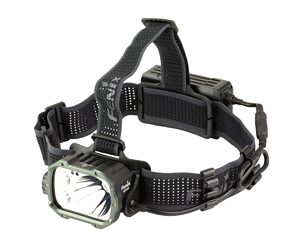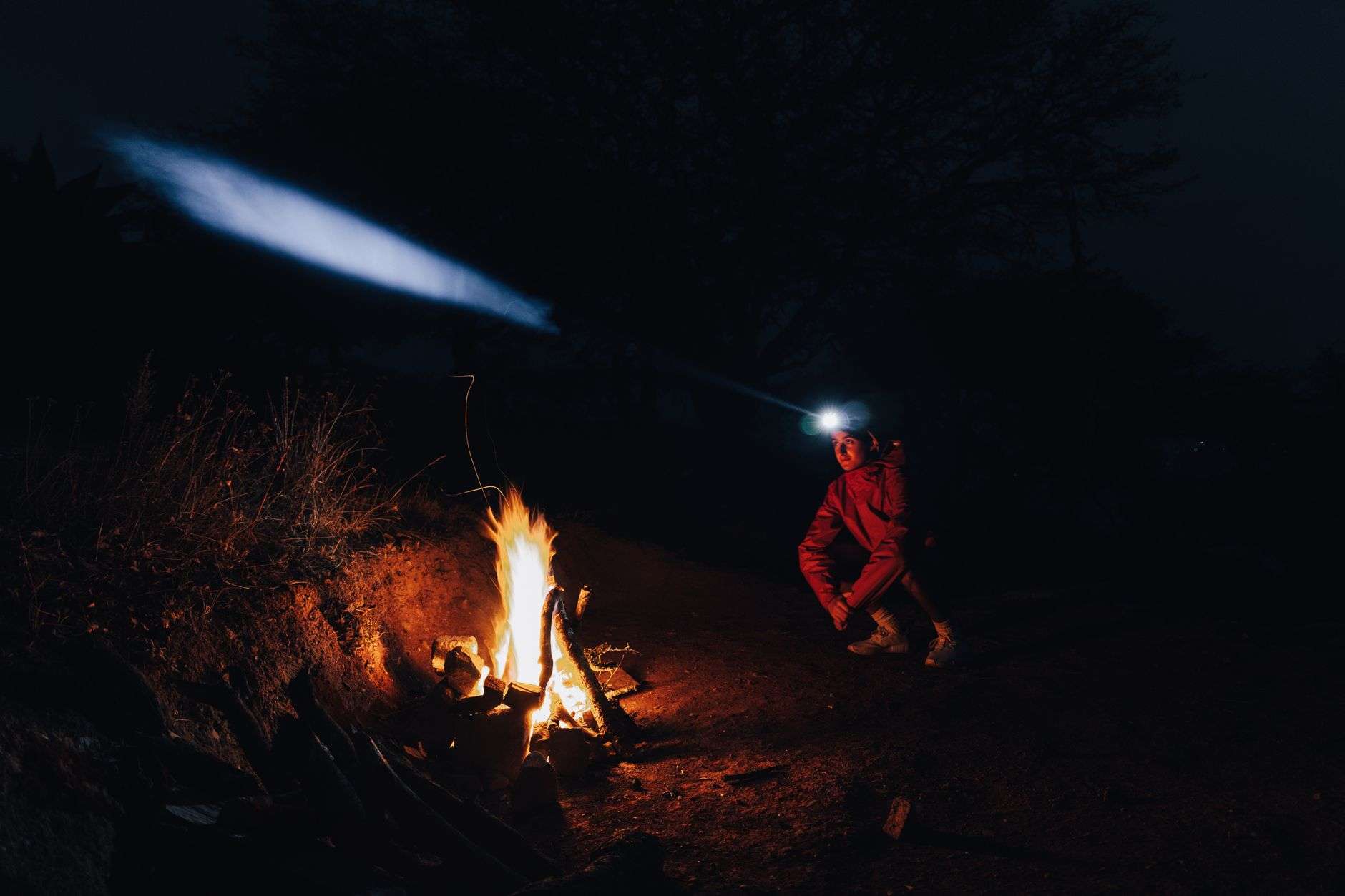
We carry close to twenty Streamlight Stinger and Strion versions. The names are nearly identical, the prices run from about $120 to about $200, and the distributor data explains none of it. Ever looked at Stinger DS LED HL 800LM next to Stinger DS HPL 800LM and wondered what the difference is? This page is for you.
Everything here comes from Streamlight’s own published material. If we couldn’t source it, we say so.
These are duty lights. Say that first.
Stinger and Strion are built for police, fire and industrial work. Run hard every shift, dropped, then dropped back in a charger at the end of it. That’s why they’re heavy, why they cost a lot for their output, and why they live in a charging cradle instead of running on throwaway batteries.
Looking for a light to hunt with? Most of this range isn’t the obvious answer, and we’d rather say so here than sell you the wrong thing. Skip to which ones make sense in the field.
What the letters mean
DS: Dual Switch. Streamlight calls it “independently operating head and tail cap switches.” Two switches, either one works the light. Use whichever suits your grip.
HL: High Lumen. The output-first models. Streamlight describes a flood beam with a “wide beam pattern” that “will light up the area around you.”
HPL: long range. Streamlight doesn’t spell out the letters. It calls these a “long-range flashlight” built around a “deep-dish parabolic reflector.”
Color-Rite: high CRI. A softer, warmer beam built for true color, not raw brightness. More below. It’s the one in this range with a real hunting case.
2020: a model generation, not a spec. Stinger 2020 and Strion 2020 are the current bodies and the brightest in each family.
The comparison that matters
Take the two 800 lumen Stingers. Same brand, same family, same number on the box. Streamlight’s published figures:
| Model | Lumens | Candela | Beam distance | Beam |
|---|---|---|---|---|
| Stinger DS LED HL | 800 | 24,000 | 310 m | Flood |
| Stinger DS HPL | 800 | 48,000 | 438 m | Long range |
Same lumens. Double the candela. 128 more meters of reach.
That’s the whole category in one table. Lumens measure how much light leaves the flashlight. Candela measures how much lands where you point it. The reflector decides which you get, and only one of those numbers is on the box.
So it isn’t better or worse. It’s this: light up everything around you, or see one thing a long way off? Camp, under the hood, walking a two-track: flood. A fence line or a far timber edge: long range.
The charger question
Almost every model here shows up twice, once as 12V DC and once as AC/DC, usually $25 to $47 apart. It confuses almost everyone, and the answer is simple. Same flashlight. Different charger in the box.
- 12V DC: vehicle power only. Right if the light lives in the truck.
- AC/DC: wall and vehicle. Right if it lives at home or on a bench.
Streamlight makes three charger grades, and that’s where recharge times come from. Steady charger: about 16 hours to fill a light. Smart charger: about 4.5 hours on USB, 3 on 12V. Smart PiggyBack: about 7.5 and 4.
Our distributor data doesn’t say which grade ships with which listing. Call before you order and we’ll find out. A 16 hour charger and a 3 hour charger are very different to live with. Not worth guessing on a $150 light.
Which ones make sense in the field
Straight answer: for most hunting, none of these is the first light we’d hand you. Field dressing and packing out take both hands, and a headlamp beats any handheld for that. A duty light is heavy for what it does, and its cradle is in your truck, not your camp.
One real exception.
Color-Rite, and blood
Color-Rite is Streamlight’s high-CRI line. CRI measures how true a light shows color. Streamlight says lights at 90 or above count as high CRI and are “critical for tasks requiring the most accurate color discrimination.” A very bright cool-white beam causes washout, which “prevents seeing subtle color differences.” Color-Rite gives up some brightness for “a softer, warmer beam to prevent color washout.”
Streamlight lists who it’s for: mechanics matching paint, electricians reading wire colors, forensic teams, and outdoor users “identifying blood trails during hunting.”
That’s their claim, not ours. We haven’t tested it against a dedicated blood tracking light. But the physics isn’t controversial. Following a thin blood trail through wet oak brush after dark is a color problem: dark red against dark brown at ten feet. It’s the one job in this range where the dimmer light is plainly the better tool.
The Stinger Color-Rite is 500 lumens. Every other light on this page beats it on the box. For that one job, it’s the one to look at.

What we carry
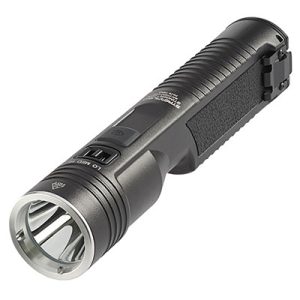
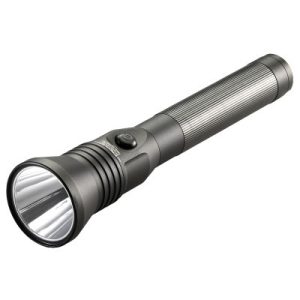
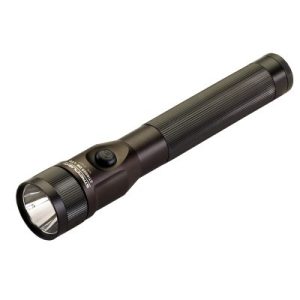
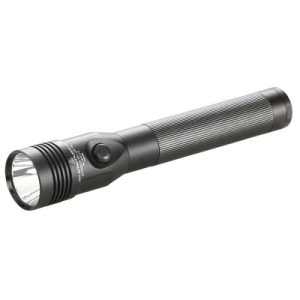
Stinger

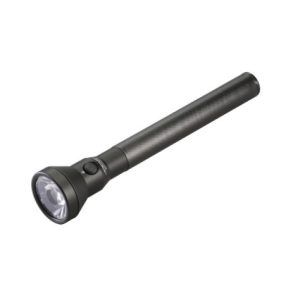
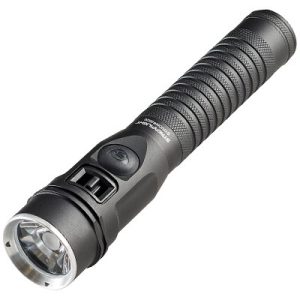
Strion
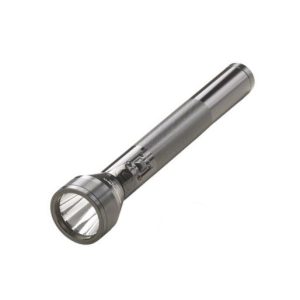
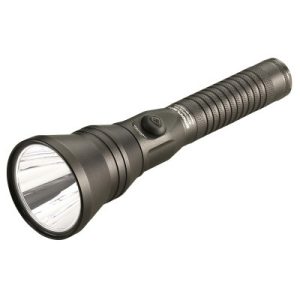
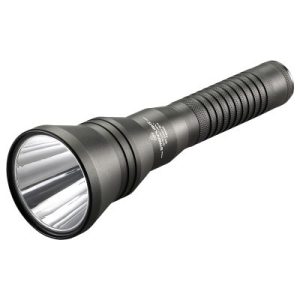
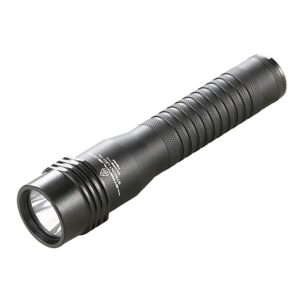
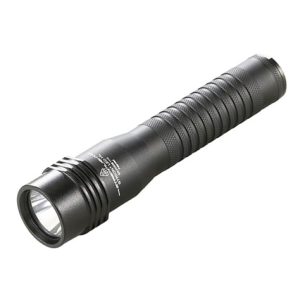
The SL-20L is in there too. It’s an older, bigger rechargeable body, and the odd one out in this group.
The short version
- Flood or reach? HL for flood, HPL for reach. The lumen number won’t tell you.
- Truck or house? 12V DC or AC/DC. Same light either way.
- Blood trailing? Color-Rite. Ignore that it’s the dimmest one here.
- Both hands busy? Get a headlamp. Headlamps and flashlights →
Sources
- Streamlight, Dual Switch Technology: the DS designation
- Streamlight, Stinger DS HPL: 800 lumens, 48,000 candela, 438 m, charger recharge times
- Streamlight, Stinger DS LED HL: 800 lumens, 24,000 candela, 310 m, flood beam
- Streamlight, Color-Rite Technology: CRI 90+, washout, listed uses including blood trailing
Season alerts
Get the next guide first
One email when a new guide goes up. A note before each elk season opens. That’s it.
Elk Season checklist